C.A.V.E.R.
This rover was designed for a theoretical mission to the moon to assess the viability of lunar pits for long-term human habitation. Lunar pits have demonstrated potential because they shield from the Sun’s radiation and maintain relatively stable temperatures. This rover aims to evaluate terrain variation, structural integrity, temperature, radiation, and the potential for in-situ resource utilization within these lunar pits.
There were five main teams working towards the common objective: the mechanical, power, command and data handling, thermal control, and payload teams. I was the lead of the thermal control team and was tasked with selecting components that would keep all other components on the spacecraft within their operating temperature ranges. This was done by conducting an energy balance analysis for the extreme heat, extreme cold, and normal temperature conditions. Appropriate components that met the dimension, mass, and power draw constraints were then selected.
Check out more details about this project below.
NASA J-MOON
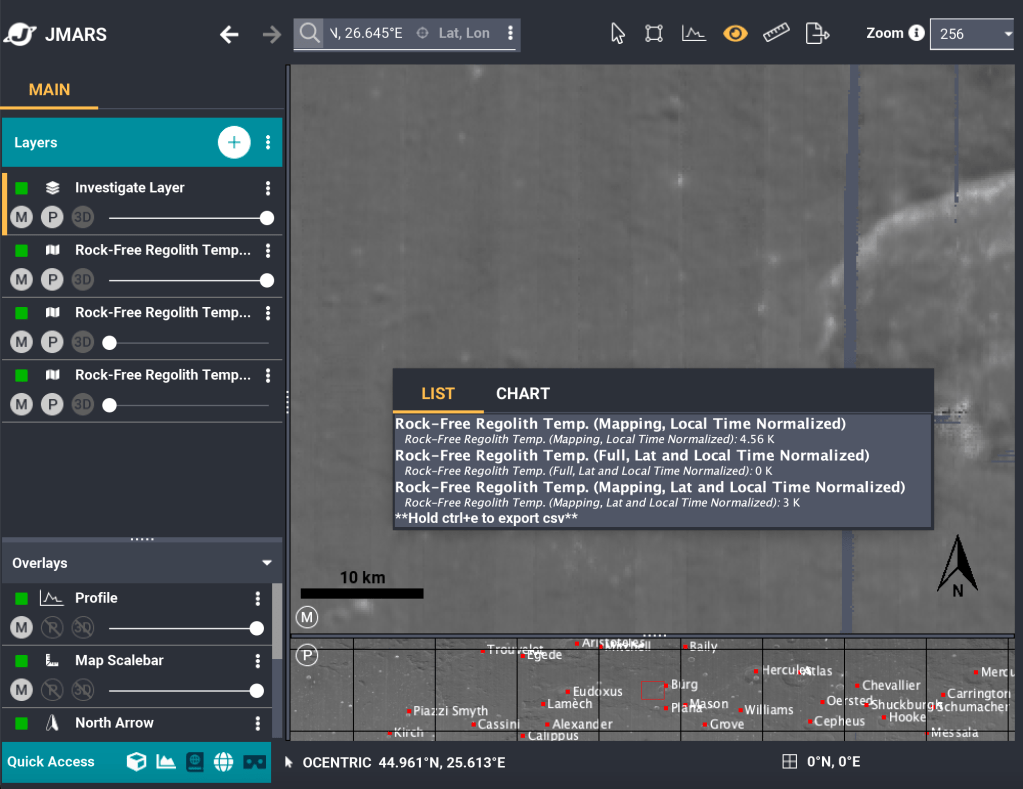
A subset of NASA JMARS that helped me find the temperature data on the lunar surface around the Lacus Mortis Pit.
Energy Balance
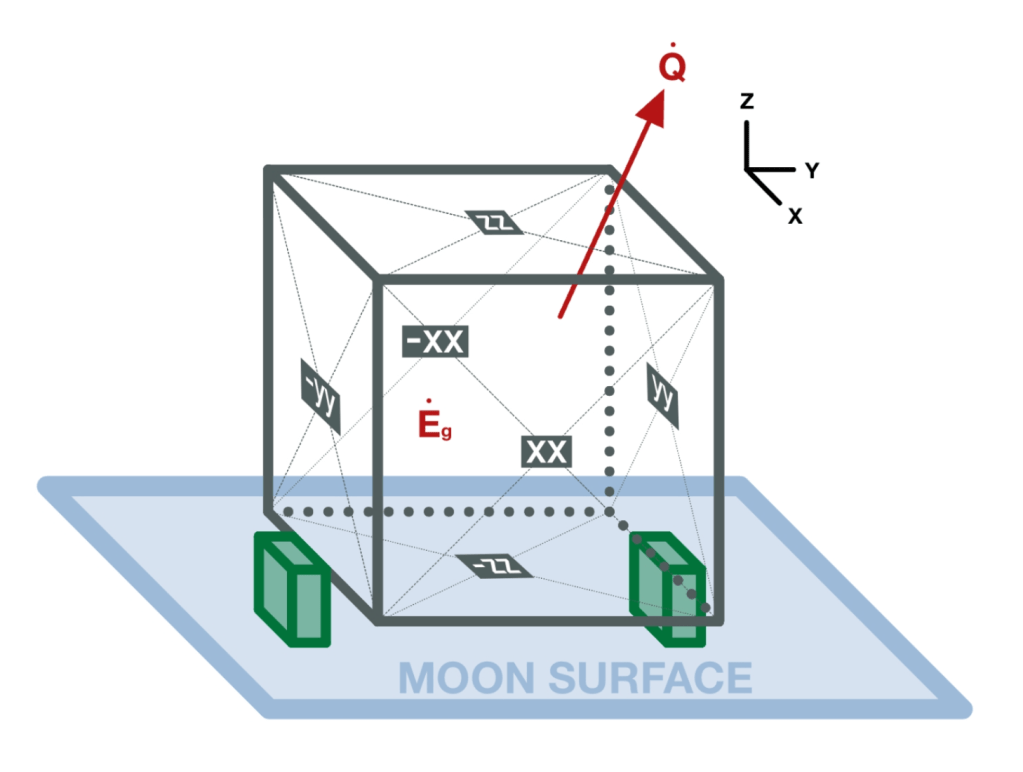
Heat flow diagrams that helped structure the governing energy balance equations. All heat flows are grouped into one Qdot “vector”.
Matrix Formulation
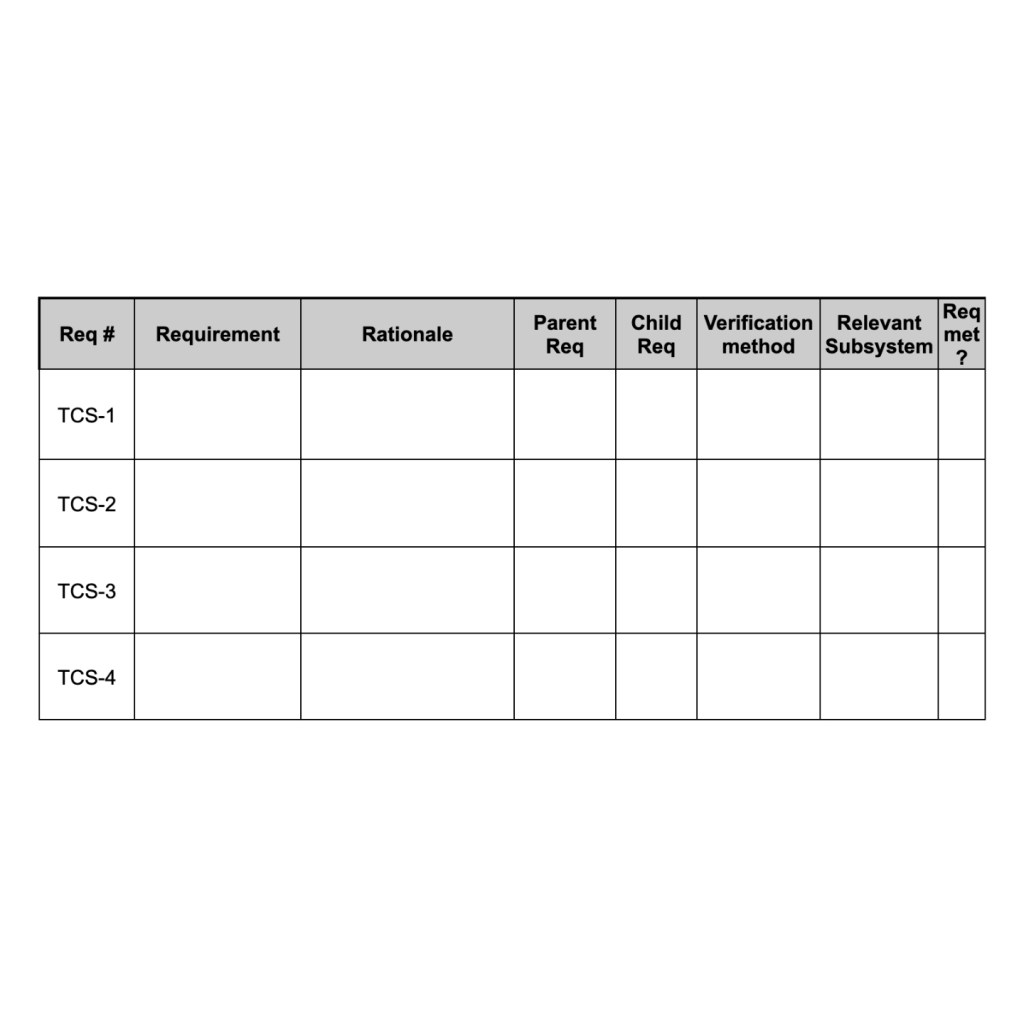
Developed requirement and verification plan matrices to communicate what and how requirements should be met.
The Result
A Preliminary Design Review document that encapsulates all aspects of the mission. This includes anything from the design to the personnel that will be on payroll for this mission’s success.
My biggest takeaway, surprisingly, wasn’t any of the engineering aspects of this project. It was learning how to formulate requirement traceability matrices to accurately define a science goal, getting used to giving regular updates to the project manager, adjusting the design due to budget cuts, and following the NASA mission lifecycle, up to the PDR phase, to make progress on a project. Ultimately, all the above is what I most appreciate learning about in this academy.
I included only excerpts of the PDR to respect my teammates’ comprehensive work.
 Alexander Aguilar